
Why the house edge is smaller than the noise around it
Craps attracts confident claims, but the math is less glamorous. On the Pass Line, the house edge is 1.41%; on Don’t Pass, it is 1.36%. That spread is tiny, yet many players ignore it and then blame variance for the loss. A $100 Pass Line bet costs about $1.41 in theoretical expectation per decision, not per hour, which is where casual estimates go wrong. If you make 50 comparable decisions, the long-run expectation is roughly -$70.50, even if the short-term swing can be far wider.
The real trap is betting structure, not the game itself. A $10 Pass Line bet with full odds changes the effective edge on the combined wager, but only because the odds portion carries 0% house edge and the flat bet still carries the cost. If you put $10 on the line and $30 behind it on 4 or 10, the expected loss stays anchored to the $10 base bet while the total money at risk rises to $40. That is why “good odds” can still produce fast losses when the flat bet is too large relative to bankroll.
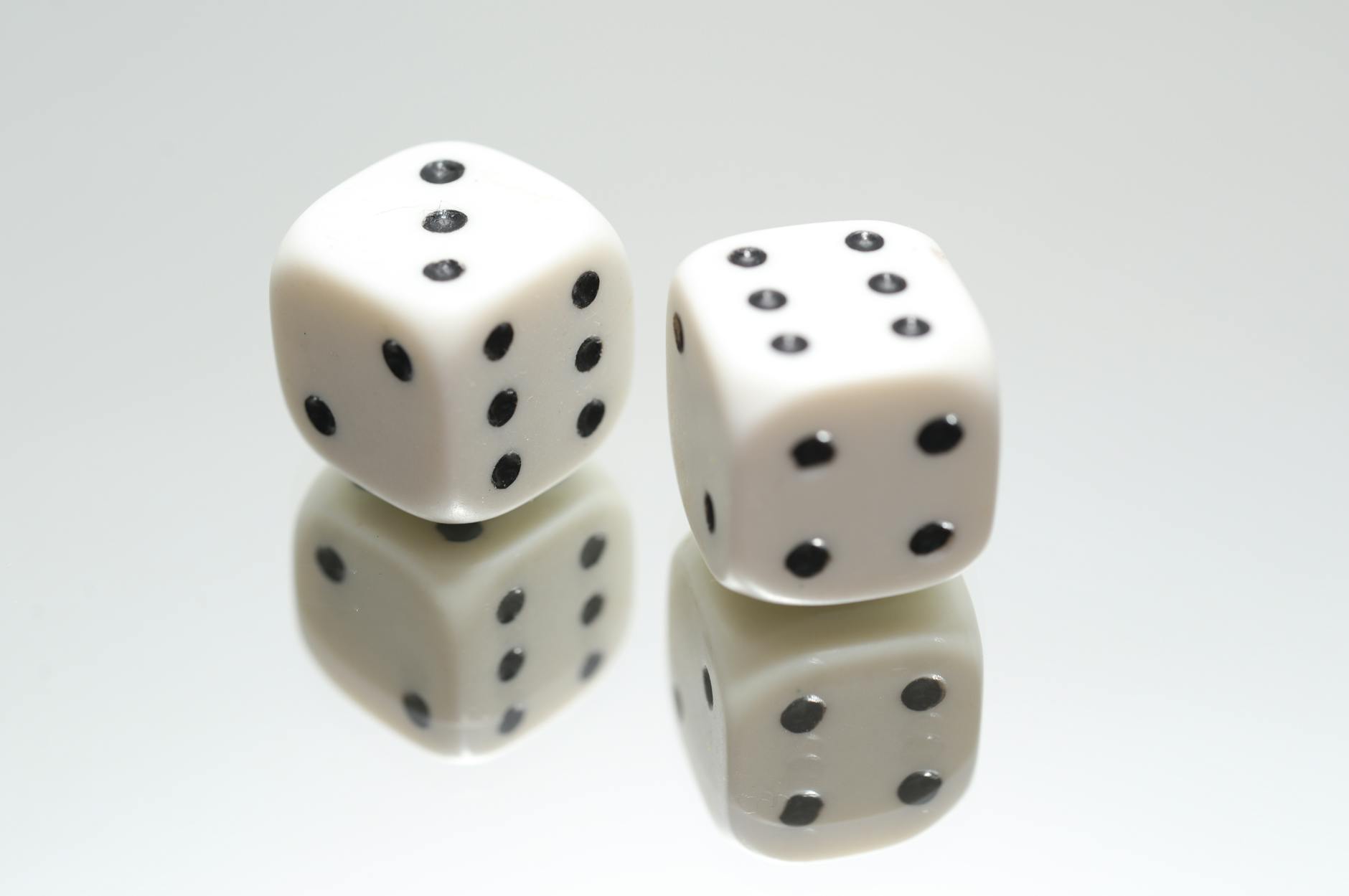
Craps — review, strategy, and the numbers behind the best-known bets
For a quick editorial reference, Craps — review, strategy, is a useful starting point, but the table below is what actually separates marketing from arithmetic.
| Bet | House Edge | $10 Expected Loss | Math Note |
|---|---|---|---|
| Pass Line | 1.41% | $0.14 | Low edge, frequent decisions |
| Don’t Pass | 1.36% | $0.14 | Slightly better than Pass Line |
| Place 6/8 | 1.52% | $0.15 | Strong if you avoid proposition bets |
| Any 7 | 16.67% | $1.67 | High variance, poor value |
Here is the skeptical read: the popular “hot shooter” story has no predictive value unless you can show a repeatable change in dice distribution. Casino-grade dice, controlled surfaces, and routine verification make that claim extremely hard to support. iTech Labs and Pragmatic Play are reminders that regulated testing focuses on fairness, not folklore. A bettor chasing one lucky roll out of 36 outcomes is paying a premium for excitement, not edge.
Bankroll math that survives a cold table
Suppose your bankroll is $500 and you want to cap risk at 2% per decision. That means a $10 base bet is the upper limit if you want 50 units of cushion. Add $30 in odds and your exposure on one resolved hand becomes $40, or 8% of bankroll. Three losing hands in a row would then mean a $120 drawdown, which is 24% of your starting stack. That is not catastrophic, but it is enough to force emotional decisions if you were planning for “small swings.”
Edge stacking is another common error. A player might place Pass Line, Come, Field, and two proposition bets on the same roll. If those bets carry house edges of 1.41%, 1.67% on the Field in many layouts, and 11% to 16.67% on the props, the blended expectation can jump from manageable to ugly very quickly. A $10 Pass Line plus $5 Field plus $5 on a proposition can turn a low-cost session into a mathematically expensive one, even before variance has time to work.
Three behavioral signals worth monitoring before the next roll
- Escalating stake size: moving from $10 to $25 after a loss means a 150% increase in exposure, not a recovery plan.
- Bet sprawl: adding more numbers and props after each roll usually raises the blended house edge, sometimes from about 1.4% to well above 5%.
- Time compression: when decisions speed up, bankroll tracking often disappears; ten quick wagers at $15 each create $150 of turnover before a player notices.
If those signals show up, close the tab and stop the session. Craps rewards discipline more than optimism, and the math punishes improvisation faster than most players expect. The cleanest strategy is simple: keep the bet list short, keep the base wager small, and treat any “system” that promises certainty as a sales pitch, not a plan.